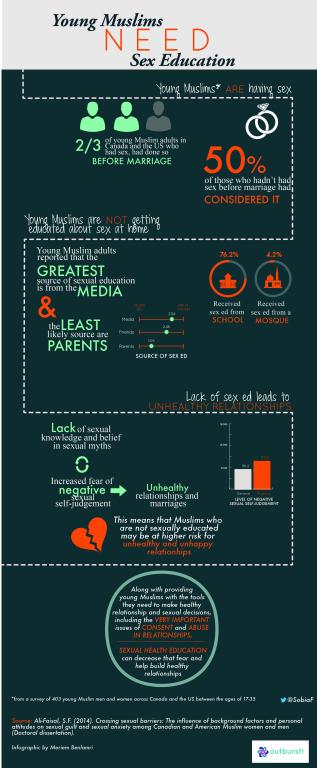
For more than four decades, sex education has been a critically important but contentious public health and policy issue in the United States [1–5]. Rising concern about nonmarital adolescent pregnancy beginning in the s and the pandemic of HIV/AIDS after shaped the need for and acceptance of formal instruction for adolescents on life-saving topics such as contraception, condoms, and sexually Cited by: Jan 01, · School-based sex education plays a vital role in the sexual health and well-being of young people. Little is known, however, about the effectiveness of efforts beyond pregnancy and sexually transmitted disease blogger.com by: 8 Nov 28, · Historically, the measure of a good sex education program has been in the numbers: marked decreases in the rates of sexually transmitted diseases, teen pregnancies, and pregnancy-related drop-outs. But, increasingly, researchers, educators, and advocates are emphasizing that sex ed should focus on more than physical health
Sexuality Education - Advocates for Youth
When only 13 states in the nation require sex education to be medically accurate, a lot is left up to interpretation in teenage health literacy, sexual education research. Research published by the Journal of Adolescent Health shows that when sex education sexual education research comprehensive, students feel more informed, make safer choices and have healthier outcomes — resulting in fewer unplanned pregnancies and more protection against sexually transmitted diseases and infections.
Of course, many young students pick up sexual health information from sources other than school: parents, peers, medical professionals, social media and pop culture.
However, public school is the best opportunity for adolescents to access formal information. Teachers are left to interpret vague legislative guidelines, meaning information might not be accurate or unbiased. The chart below compares the legislative policies of all 50 states, including how they mandate specific aspects of sex education like contraception, abstinence and sexual orientation.
While only roughly half of states sexual education research the U. require sex education, even fewer states have legislation requiring medical accuracy, inclusive language, and information about contraception. Go to a tabular version of Sex Ed Legislation in the United States. Even when sex education is required, state policies still vary widely regarding the inclusion of critical information.
USC Suzanne Dworak-Peck School of Social Work Department of Nursing professor Dr, sexual education research. Theresa Granger says that comprehensive sex ed goes beyond the biophysical aspects. Granger said that in order to be comprehensive, sex education programs have to consider the whole student. But many states leave issues like sexual orientation and contraception unaddressed, and some even prohibit public schools from addressing them.
It can take years for policies to change, even in the most progressive sexual education research. Before the new law went into effect last January, California left sex education as an optional component of health curricula for students in grades 7 through The legislation is part of a nationwide trend — albeit a slow and deliberate one — to transform disjointed sex education laws into comprehensive requirements that lead to better health outcomes for adolescents in public schools, says Nash, who has tracked sex education policies for over a decade.
Other states have a more volatile history with regulating sex education. In recent years, states have begun to mandate sex ed to include information about learning life skills for sexual education research communication, sexual education research, avoiding coercion and making healthy decisions. According to Nash, including these skills is part of progressive trends across the country, where states have begun to require discussions of sexual consent, harassment and sexual orientation.
Overall, most trends are slow to change. The result of sex education sexual education research becomes more clear when considering that inthe United States had higher rates of teen pregnancy and sexually transmitted disease than most other industrialized countries, according to research published by the Guttmacher Institute in the National Library of Medicine. What feels like progress at the state level can be seen as mere catch-up to the policies of other developed nations that require teachers to discuss sex ed as early as kindergarten.
Granger said school programs need to work on adapting to current health issues and trends that affect the scope of sexual health literacy.
Though the teen birth rate varies across states, studies show that teens have a lower risk of pregnancy when they have access to comprehensive sex ed sexual education research contraception. Go to a tabular version of Teen Birth Rates in the United States. Even though the United States falls behind other sexual education research nations in preventing teen births, its teen pregnancy rates hit an all-time low ina decade-long trend that has been attributed by many studies to increased education about contraception in public schools, sexual education research.
A report on comprehensive sex-ed published in the Journal of Adolescent Health in concluded sexual education research when sex education included information about contraception, sexual education research, teens had a lower risk of pregnancy than adolescents who received abstinence-only or no sex sexual education research. The findings could alleviate a common fear of parents and teachers who worry that students are more likely to increase their sexual activity after receiving comprehensive sex education.
The more students can access accurate information from a trusted provider, the more prepared they can be when making decisions about their bodies and relationships. Granger said that in her clinical experience, teens will make a decision to engage in sexual activity whether or not they feel adequately informed, leaving health professionals with an opportunity to promote sexual health literacy.
People ages 15 to 19 report more cases of STDs than any other age group, according to the CDC. Go to a tabular version of STDs Reported by Teens in the United States, sexual education research. According to the CDC, teens who identify with LGBTQ communities can be at higher risk of contracting STDs, but safeguarding against transmissions becomes difficult when states prohibit teachers from discussing sexual orientation in class.
Some states expect that sexual orientation will get discussed at home, but the reality is that many students feel they lack the relationships to comfortably ask parents, teachers or peers about health information related to orientation. Though this loophole is disappearing in some states like Tennessee, it allows students to stay engaged in discussions that would otherwise exclude them because of focus on heterosexual relationships.
But discrepancies persist across communities over the responsibility of providing meaningful sex education. One of the main challenges of mandating comprehensive sex education is considering everyone involved in the process: students, their classmates, parents, teachers and legislators. Teachers feel pressure from parents to deliver just the right amount of information, but students tune out when educators fail to address their individual questions.
So sexual education research responsibility is it to make sure young people have the information they need to make healthy choices? She currently practices inWashington, one of few states that allows minors to seek testing and treatment for STDs, sexual education research, as well as contraception, without consent from a parent or guardian, as indicated in a document on providing health care to minors in Washington state PDF, 92KB.
Though the conversations can be difficult, she said acknowledging the awkwardness can alleviate the tension around discussions of sexual health for parents and their children.
Encouraging openness and compassion helps parents and teens keep communication flowing with honesty, sexual education research, says Granger, and it is something all family nurse practitioners can do with their patients.
Sometimes sexual education research best place to start can be asking pediatric patients to talk about what they already know. We need to educate teens whenever and wherever they are. The following section contains tabular data from the graphics in this post. The chart below indicates which states require critical components of comprehensive sex education and whether they mandate sex education at all.
Source: Guttmacher Institute, sexual education research, Though the teen pregnancy rate has hit a historic low in the United States, the nation still holds one of the highest rates in the developed world, sexual education research. People can report having more than one STD within a year; this data reflects the rate of cases per 1, people in the 15—24 age group estimated in a state.
Data Source: National Electronic Telecommunications System for Surveillance, Centers for Disease Control and Prevention, Created by the USC Suzanne Dworak-Peck School of Social Work Department of Nursing, sexual education research. State-by-State Sex Education Policies. What Does Comprehensive Sex Ed Look Like? The Health Outcomes of Comprehensive Sex Education.
Teen Pregnancy. Sexually Transmitted Diseases and Infections. States Where Sex Education Is Mandated. California Delaware District of Columbia Georgia Hawaii Iowa Kentucky Maine Maryland Minnesota.
Mississippi Montana Nevada New Jersey New Mexico North Carolina North Dakota Ohio Oregon Rhode Island. South Carolina Tennessee: Sex education is required if the pregnancy rate for women ages is at least Vermont West Virginia. States Where Sex Education Must Be Medically Accurate When Taught. California Colorado Hawaii Illinois Iowa. Oregon Rhode Island Utah Washington. States Where Sex Education Must Cover Contraception.
Alabama Sexual education research Colorado Delaware District of Columbia Hawaii Illinois Maine. Maryland Mississippi: Localities may sexual education research topics such as contraception or STIs only with permission from the State Department of Education.
New Jersey New Mexico North Carolina. Oregon Rhode Island South Carolina Vermont Virginia Washington West Virginia. States Where Sex Education Must Cover Abstinence.
California Colorado Sexual education research Kentucky. Maryland Minnesota Montana New Mexico. North Dakota Vermont Virginia West Virginia. States Where Sex Education Must Stress Abstinence.
Alabama Arizona Sexual education research Delaware Florida Georgia Illinois: Sex education is not mandatory, but health education is required and includes medically accurate information on abstinence. Indiana Louisiana Maine Massachusetts Mississippi Missouri New Jersey North Carolina Ohio.
Oklahoma Sexual education research Rhode Island South Carolina Tennessee Texas Utah Washington Wisconsin. States Where Sex Education Must Be Inclusive of Sexual Orientation. California Colorado Connecticut. Iowa New Jersey New Mexico. Oregon Rhode Island Washington. States Where Sex Education Must Be Negative Toward Sexual Orientation.
Alaska Kansas Nebraska South Dakota Wyoming, sexual education research. Alabama Kentucky: North Dakota: Alabama: Ohio: close Close Modal Get More Information.
Next Step.
Why we shouldn’t shy away from sexual education - Dr. V. Chandra-Mouli - TEDxChisinau
, time: 16:50America’s Sex Education: How We Are Failing Our Students - Nursing@USC
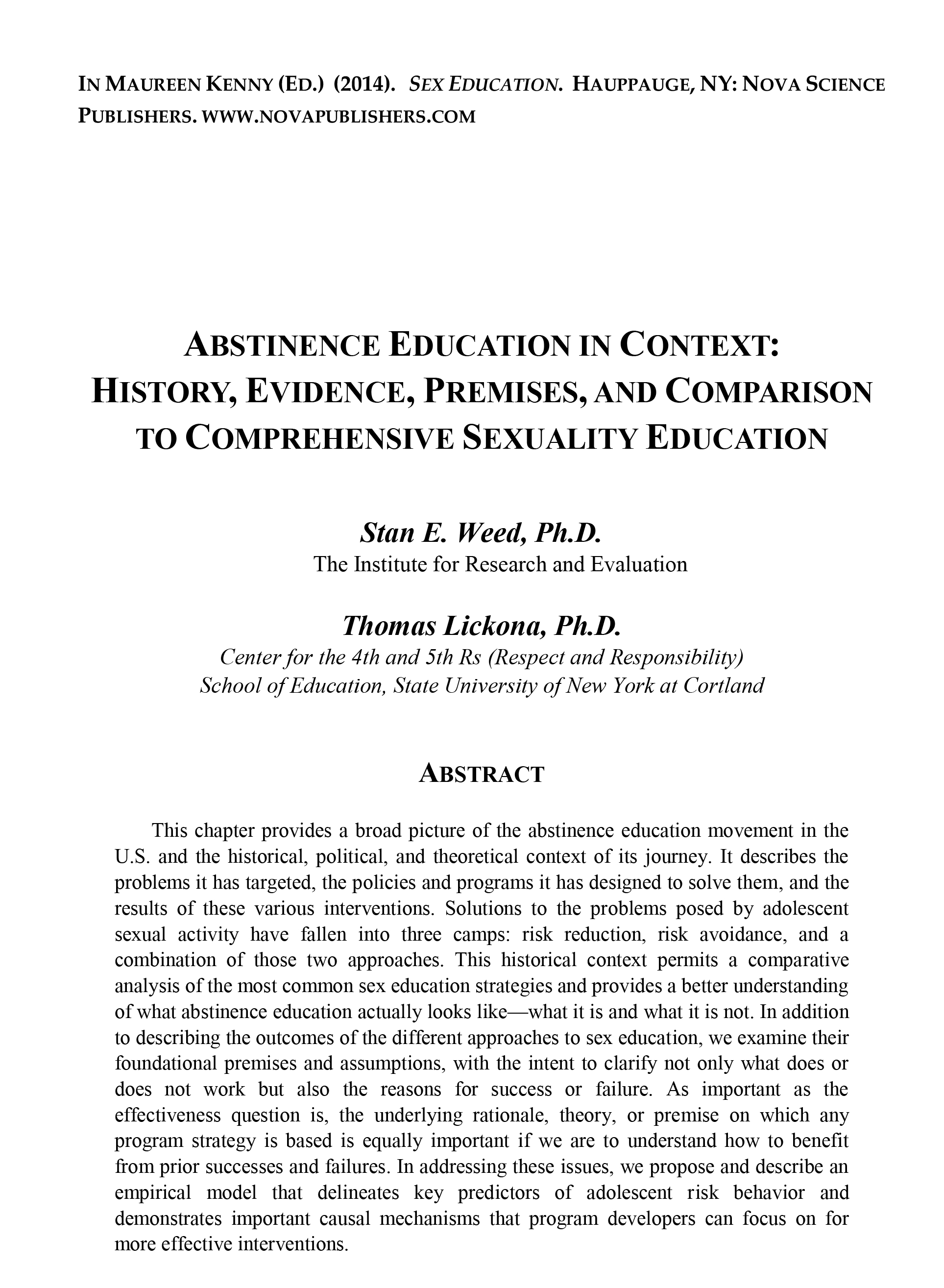
Feb 03, · Quality sexual health education programs teach students how to: Analyze family, peer, and media influences that impact health; Access valid and reliable health information, products, and services (e.g., HIV/STD testing) Communicate with family, peers, and teachers about issues that affect health; Make informed and thoughtful decisions about their health Aug 01, · A review of 12 studies on parental communication about sex revealed that parents who received training on this topic had better communication with their adolescents about sexuality compared with those who did not. 46 Parental conversations with their adolescents about sexuality education is correlated with a delay in sexual debut and increased use of contraception and condoms. 47 Jaccard Cited by: Abstract. Purpose: School-based sex education plays a vital role in the sexual health and well-being of young people. Little is known, however, about the effectiveness of efforts beyond pregnancy and sexually transmitted disease prevention. The authors conducted a systematic literature review of three decades of research on school-based programs to find evidence for the effectiveness of comprehensive sex blogger.com by: 8

No comments:
Post a Comment